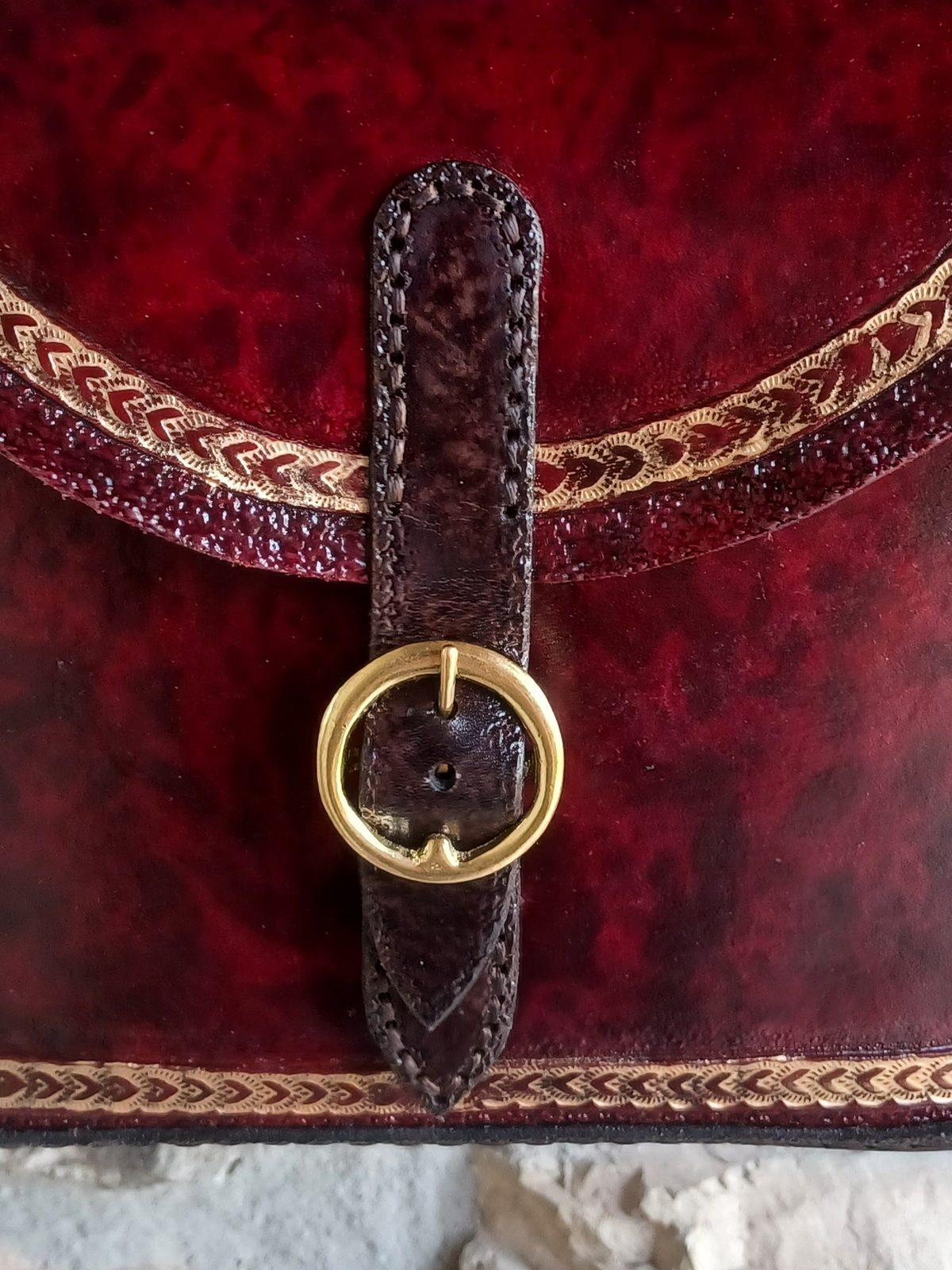
Select & cut
The hide is read for grain and blemish, then the pattern is laid out and cut by hand. Edges are bevelled before anything else happens.
From hide to finished piece
There is a fast way to make a leather bag, and this is not it. Here is what actually happens on the bench.
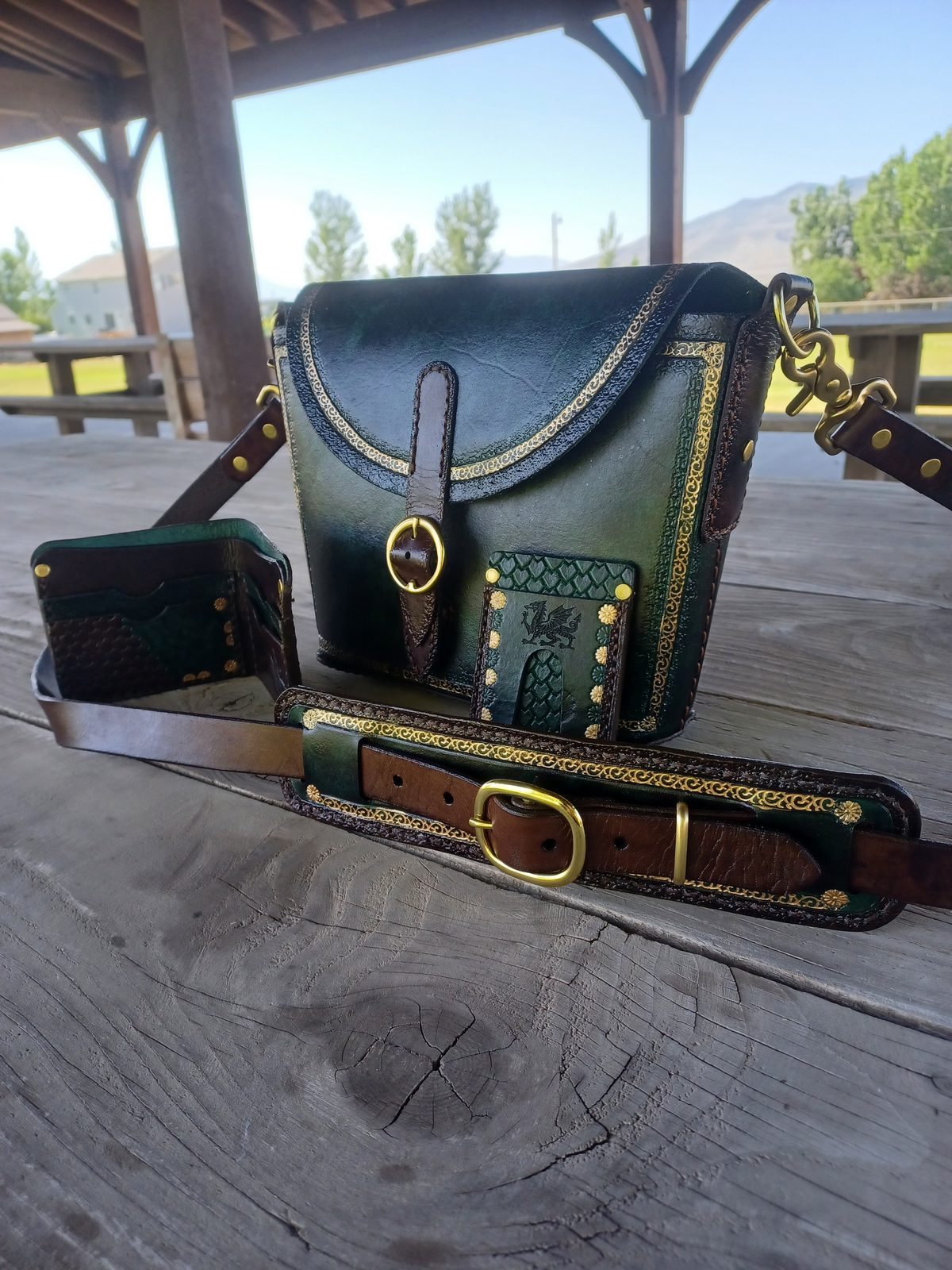
Why it takes as long as it does
No production line, no outsourced panels, no printed “tooling.” The same person who reads the hide is the one who strikes the border, blends the dye and sets the last rivet.
That is the reason two pieces in the same colour will not match, and the reason a matched set has to be made together rather than assembled from stock.
The process
The hide is read for grain and blemish, then the pattern is laid out and cut by hand. Edges are bevelled before anything else happens.
Leather is dampened to the right temper and struck stamp by stamp. A single border can be several hundred impressions, and a mis-strike does not come out.
Thin coats, built up and blended wet — which is where the mottled, backlit depth comes from. It cannot be rushed and it cannot be repeated exactly.
Gold is worked into the tooled impression by hand so the pattern catches light at an angle and disappears straight on.
Edges are slicked and burnished until they take a shine, then saddle-stitched with waxed thread — two needles, one seam, no machine.
Solid brass buckles, rings and rivets are set, the piece is sealed against water, and then it sits and cures before it goes anywhere.
Looking after it
Let it get wet, then let it dry slowly. Away from direct heat — no radiators, no hairdryers. Heat is what cracks leather, not water.
Condition twice a year. A neutral cream, worked in thin and buffed off. Less than you think.
Expect it to darken. Hand-dyed leather deepens with light and wear. The piece you get in year five will not be the one you bought.
Brass will patina. Leave it and it goes warm and dull; polish it and it comes straight back.